
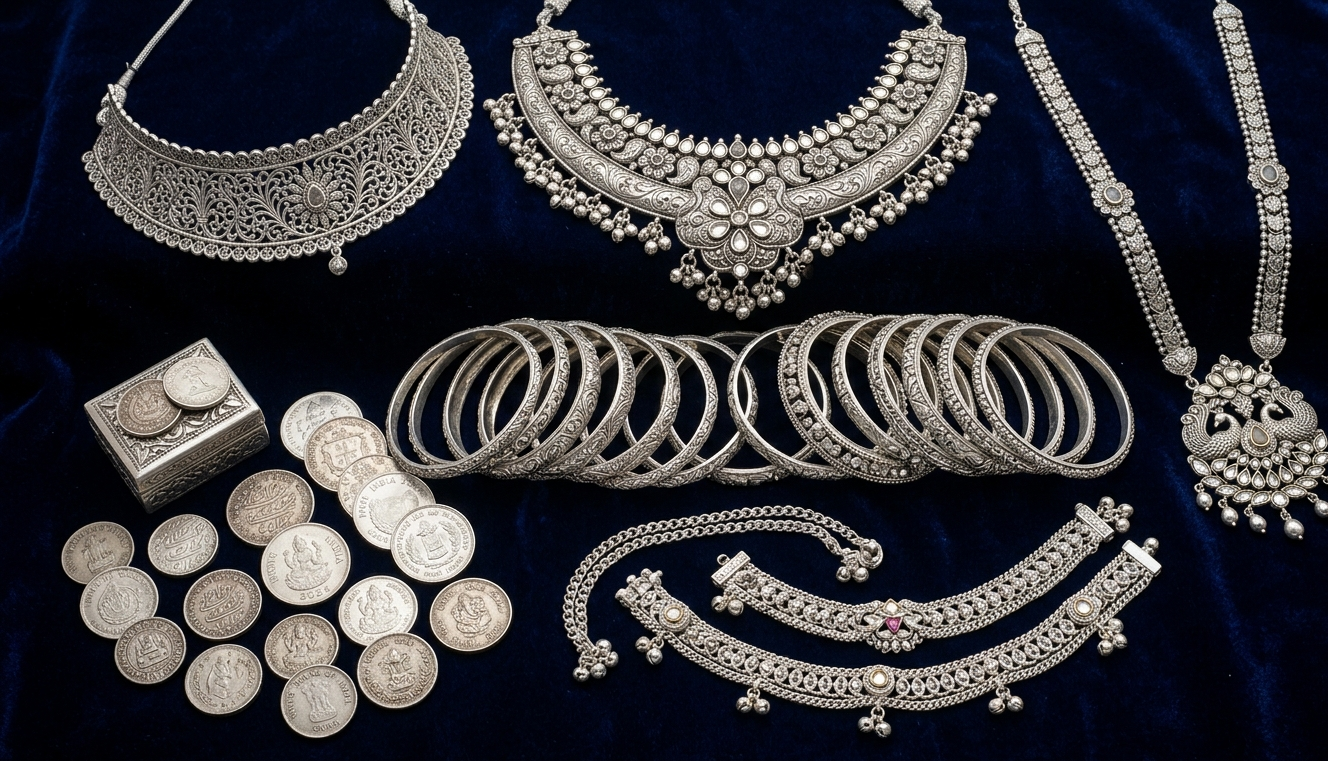
RBI guidelines for silver jewelry loans in 2026 mark a historic shift in Indian banking — for the first time, your household silver can now be pledged as collateral for a formal bank loan, just like gold. The RBI guidelines for silver jewelry loans 2026, effective April 1, 2026, under the “Lending Against Gold and Silver Collateral Directions, 2025,” cover everything from LTV ratios to purity testing to borrower protections. As a 14-year senior banking professional, I will tell you exactly what these RBI guidelines for silver jewelry loans 2026 mean in practice — the loan amounts you can actually get, how banks test your silver’s purity, what happens if you default, and whether a silver loan is the right choice for your financial situation.
The RBI guidelines for silver jewelry loans 2026 apply to all commercial banks, NBFCs, cooperative banks and housing finance companies across India. Understanding the RBI guidelines for silver jewelry loans 2026 is essential because silver prices have surged significantly in 2025–26, making your household silver far more valuable as collateral than most families realize. Whether you have inherited silver ornaments, gifted silver jewelry, or accumulated silver coins over years — the RBI guidelines for silver jewelry loans 2026 now give you a formal, regulated way to unlock that value without selling your precious assets.
RBI Guidelines Silver Jewelry Loans 2026 — Complete Rules, LTV Ratios and Process
- Effective April 1, 2026 — RBI’s “Lending Against Gold and Silver Collateral Directions, 2025” formally allows banks, NBFCs and cooperative banks to give loans against silver jewelry and coins for the first time.
- LTV Ratios: Up to ₹2.5 lakh → 85% LTV. ₹2.5–5 lakh → 80% LTV. Above ₹5 lakh → 75% LTV. Maintained throughout loan tenure, not just at sanction.
- Pledge limits: Maximum 10 kg silver jewelry per borrower. Maximum 500 grams silver coins. Silver bars, bullion, ETFs and mutual funds NOT eligible.
- Purity testing is mandatory — banks must use machine-based methods (XRF testing). Borrower must be present during valuation and receives a purity certificate.
- Collateral return rule: Bank must return your silver within 7 working days of full repayment — or pay ₹5,000 per day compensation for delays.
In 14 years of banking, I have seen hundreds of families sit on lakhs of rupees worth of silver jewelry — inherited pieces, gifted sets, old coins — that earned zero returns and provided zero liquidity. The money was there, but it was locked.
The RBI guidelines for silver jewelry loans 2026 change this completely. From April 1, 2026, that silver in your locker is no longer idle capital — it is formal loan collateral. Here is everything you need to know before you walk into a bank branch.
What Are Silver Jewelry Loans Under RBI Guidelines 2026?
A silver jewelry loan works exactly like a gold loan. You pledge your physical silver ornaments or coins with a regulated lender. The lender values the silver based on its purity and current market price, then gives you a loan of up to 75–85% of that value. You repay with interest and get your silver back.
What makes the RBI guidelines for silver jewelry loans 2026 significant is that this is the first time silver has been given the same formal recognition as gold in India’s banking system. Previously, silver loans existed only through unorganized moneylenders at exploitative rates. Now the RBI has brought the entire framework under one uniform rulebook.
RBI Silver Jewelry Loan LTV Ratios 2026 — How Much Can You Borrow?
The RBI guidelines for silver jewelry loans 2026 introduce a tiered LTV structure based on loan amount. This is the most important table every silver loan borrower must understand:
| Loan Amount | Maximum LTV Ratio | Example (Silver Value ₹1 Lakh) | Max Loan You Get |
|---|---|---|---|
| Up to ₹2.5 Lakh | 85% | Silver worth ₹1,00,000 | ₹85,000 |
| ₹2.5 Lakh to ₹5 Lakh | 80% | Silver worth ₹3,00,000 | ₹2,40,000 |
| Above ₹5 Lakh | 75% | Silver worth ₹8,00,000 | ₹6,00,000 |
Silver Loan Calculator — RBI 2026 LTV Rules
Enter your silver’s weight and estimated purity to calculate your maximum loan amount under RBI guidelines for silver jewelry loans 2026.
🥈 Silver Loan Eligibility Calculator — RBI Guidelines 2026
Based on RBI “Lending Against Gold and Silver Collateral Directions, 2025” — effective April 1, 2026
What Silver Can You Pledge Under RBI Guidelines 2026?
| Silver Type | Eligible? | Limit |
|---|---|---|
| Silver jewelry and ornaments | ✅ Yes | Up to 10 kg per borrower |
| Silver coins | ✅ Yes | Up to 500 grams per borrower |
| Silver household articles (utensils, idols) | ✅ Subject to lender policy | Varies by lender |
| Silver bars / bullion | ❌ Not eligible | — |
| Silver ETFs | ❌ Not eligible | — |
| Silver mutual funds | ❌ Not eligible | — |
| Silver-backed financial products | ❌ Not eligible | — |
How Banks Check Silver Purity Under RBI Guidelines 2026
This is where the RBI guidelines for silver jewelry loans 2026 make a major change from earlier practice. Banks can no longer rely on visual inspection or manual testing alone.
The New Mandatory Purity Testing Process
Machine-based purity testing — mandatory
Banks must test silver purity using machine-based methods — typically XRF (X-ray Fluorescence) analyzers. Manual testing alone is no longer permitted under RBI guidelines for silver jewelry loans 2026. You must be present during the entire testing process.
Weight measurement in your presence
The bank weighs your silver in front of you. The lender must explain all deductions — for stones, other metals, non-silver components. Every deduction must be documented and explained.
Valuation using IBJA or SEBI-regulated exchange price
The bank must use the lower of (a) the 30-day average closing price of silver at that purity, or (b) the previous day’s closing price — as published by IBJA (India Bullion and Jewellers Association) or a SEBI-regulated commodity exchange. This conservative valuation protects the bank from price fluctuations.
Purity certificate issued to you
The lender must give you a written certificate showing: silver weight, purity percentage, deductions made, assessed value, and the price reference used. Keep this certificate safely — you will need it at repayment time.
Ownership proof requirement
You must provide either original purchase receipt or a signed ownership declaration. RBI 2026 rules prohibit loans if ownership is doubtful. Inherited silver without receipts? A simple declaration stating how you obtained it works — banks must accept this.
Silver Loan vs Gold Loan — Which is Better Under RBI Guidelines 2026?
🥈 Silver Loan 2026
- Lower value per gram than gold
- Same LTV ratios as gold loan
- Same borrower protections
- Higher price volatility risk
- Max 10 kg jewelry (much higher weight)
- Interest rates: 9–14% p.a. typically
- Good for large silver holdings
- Fewer lenders offering it initially
🥇 Gold Loan 2026
- Higher value per gram — more loan per gram
- Same LTV ratios as silver loan
- More lenders, more competition
- Lower price volatility risk
- Max 1 kg jewelry
- Interest rates: 7–12% p.a. typically
- Better for smaller, high-value pieces
- More established — faster processing
Borrower Protections Under RBI Silver Jewelry Loan Guidelines 2026
| Protection | What RBI Mandates | Benefit to You |
|---|---|---|
| Purity certificate | Mandatory — must be given at sanction | You know exact value of your silver |
| Collateral return | Within 7 working days of full repayment | No indefinite retention by bank |
| Delay penalty | ₹5,000 per day if bank delays return | Strong incentive for bank to return promptly |
| Auction process | Digital documentation + borrower notification mandatory | No surprise auctions — you are informed |
| Re-pledging block | Digital pledge registry prevents same silver pledged twice | Protects your collateral from fraud |
| Bullet loan tenure | Maximum 12 months for lump-sum repayment loans | Short tenure — plan repayment carefully |
| Rollover condition | Interest must be paid before rollover allowed | Cannot keep rolling without paying interest |
| Storage standards | Geo-tagged vault with audit trails | Your silver is in secured, tracked storage |
Silver Loan Interest Rates 2026 — What to Expect
The RBI guidelines for silver jewelry loans 2026 do not fix a specific interest rate — that is left to individual lenders. Based on early bank launches, here is what you can expect:
| Lender Type | Expected Interest Rate | Processing Fee | Best For |
|---|---|---|---|
| PSU Banks (SBI, PNB, BoI) | 9–11% p.a. | 0.5% or lower | Lowest rates, slower process |
| Private Banks (HDFC, ICICI) | 10–13% p.a. | 0.5–1% | Faster processing |
| Small Finance Banks | 11–13% p.a. | 0.5–1% | Tier-2 city access |
| Gold Loan NBFCs (Muthoot, Manappuram) | 12–16% p.a. | 1–2% | Fastest disbursal |
| Cooperative Banks | 9–12% p.a. | Low | Rural/semi-urban borrowers |
Who Should Take a Silver Loan Under RBI Guidelines 2026?
✅ Good Candidates for Silver Loan 2026
- Families with large silver holdings from weddings, inheritance, or gifts
- Small business owners needing short-term working capital (3–12 months)
- Farmers in silver-holding rural families needing crop season funds
- Anyone whose gold is already pledged and needs additional liquidity
- Those who need ₹50,000–₹5,00,000 quickly without selling their silver
❌ Not Suitable For
- Long-term borrowing needs — bullet repayment maximum 12 months
- Anyone who cannot comfortably repay within tenure — risk of auction
- Those with small silver quantities — loan amount will be minimal
- Anyone using silver loan funds to speculate in silver/gold markets (RBI prohibits this)
“The RBI guidelines for silver jewelry loans 2026 are a genuinely positive development for Indian households — particularly rural and semi-urban families who hold significant silver wealth that was previously dead capital. The borrower protections are strong: purity certificates, machine testing in your presence, 7-day return guarantee, and ₹5,000 daily penalty for late return. My advice: compare at least 3 lenders before pledging, always insist on the purity certificate, and never take a silver loan for longer than you are certain you can repay. Silver price volatility means a margin call is more likely with silver than with gold. Start with a PSU bank — rates are 2–3% lower than NBFCs, and the regulated process gives you the strongest protection.”
RBI Silver Jewelry Loan Guidelines 2026 — Frequently Asked Questions
Want to Know How Much You Can Get Against Your Silver?
Our banking experts calculate your exact silver loan eligibility under RBI guidelines 2026, compare rates from 10+ lenders, and tell you exactly which bank to approach — completely free.
📎 Sources:
Outlook Money — RBI Silver Loan Rules ·
GoodReturns — Silver Loan April 2026 ·
ReLakhs — Silver Loan Analysis ·
RBI “Lending Against Gold and Silver Collateral Directions, 2025” · Effective April 1, 2026.
For informational purposes only. Verify rates and terms with your lender before borrowing.